
CTG Weekly Reflections
.png)
Friday, 2nd October 2026
What We Have, What We Share
Harvest is traditionally a time to give thanks for what we have. But perhaps it also gives us an opportunity to think about what we can give. Education itself is an act of giving. Every lesson taught, every opportunity created and every bit of encouragement offered passes something valuable from one person to another.
This Harvest, may we be grateful for all that we have been given and generous with what we have to share.
“God loves a cheerful giver.” - 2 Corinthians 9:7
.png)
As we mark National Teaching Assistants’ Day this Friday, we celebrate the people who quietly offer a helping hand every day.
Every school day is full of moments when someone helps another person move forward - in their learning, their confidence or their sense of belonging.
“Serve one another humbly in love.” – Galatians 5:13
This week, let’s be thankful for the helping hands in our school communities and look for opportunities to offer our own.
.png)
This Sunday marks Home Mission Sunday, a time for Catholics across England and Wales to reflect on how we share our faith with those around us.
In a school community, that mission often happens in the smallest of moments. It can be found in the welcome offered to someone who feels left out, the patience shown to a pupil having a difficult day, the encouragement given when someone is struggling, or simply taking the time to listen.
We do not always need grand gestures or perfect words to share our faith. Often, it is through the way we treat one another that the values of the Gospel become most visible.
As we reflect on Home Mission Sunday, perhaps we can consider how our everyday actions help make our schools places of kindness, hope and belonging.
“Let your light shine before others, that they may see your good deeds and glorify your Father in heaven.” - Matthew 5:16
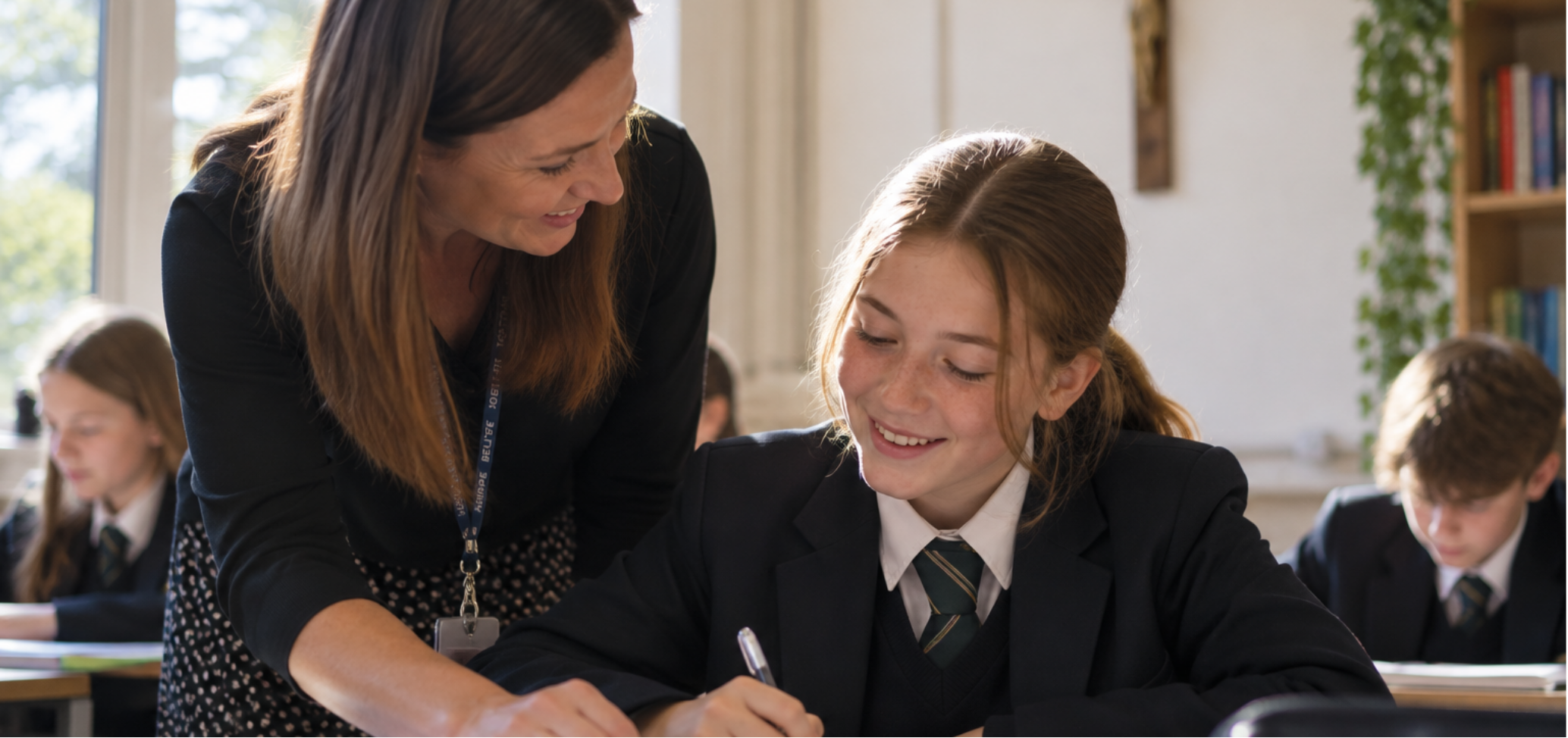
This Sunday, 13 September, we celebrate Education Sunday, giving thanks for everyone who contributes to Catholic education.
This year’s Gospel reminds us of Jesus’ call to forgive not simply seven times, but “seventy times seven.”
Schools are places where second chances happen every day: another explanation, another attempt, a disagreement resolved, a mistake learned from, or simply the opportunity to start again tomorrow.
As the new academic year begins, we give thanks for the teachers, leaders, support staff, chaplains, governors, families and pupils who make our Catholic school communities what they are.
May this year be one in which we continue to show one another patience, compassion and forgiveness, and never underestimate the difference that another chance can make.
.png)
There is something special about the beginning of a new school year. Classrooms are prepared, corridors fill again and familiar routines slowly return. For some, September brings excitement and enthusiasm; for others, it can bring uncertainty about what lies ahead.
In our Catholic schools, the beginning of a new year gives us an opportunity to think again about the communities we want to create.
A warm welcome can seem like a small thing, but it matters. The pupil arriving at a new school, the member of staff joining a new team or the colleague returning after a difficult summer may all be carrying worries that we cannot see. A smile, a conversation or a simple offer of help can make someone feel that they belong.
St Paul reminds us:
“Welcome one another, therefore, just as Christ has welcomed you.”
Romans 15:7
As we begin this academic year, perhaps our challenge is simply to carry that spirit of welcome into the everyday life of our schools. Amid the timetables, meetings, lessons and deadlines, may we continue to notice one another and make time for kindness.
We do not know what this school year will bring, but we begin it together. May God bless our pupils, staff and families, guide us through the challenges ahead and help our schools remain places of faith, hope and welcome.